Automation and AI in Ecommerce Fulfilment
Background & context
Manual fulfilment environments are more forgiving than many businesses realise. Experienced teams can compensate for gaps in process, inconsistent data or last‑minute decision making. Human judgement absorbs friction and keeps orders moving, even when the system itself is fragile.Automation removes that safety net.Automated environments depend on consistency, predictability and clearly defined rules. They require accurate inbound processes, clean SKU data, disciplined inventory governance and structured order flow. Where those foundations are in place, automation compounds performance. Where they are not, issues surface quickly and visibly.This is why automation often feels harder before it feels easier. Problems that were previously hidden by manual intervention become impossible to ignore. Inconsistent master data causes mis‑picks. Weak inbound controls lead to blocked locations. Unclear exception handling slows throughput. The technology performs exactly as designed, but the surrounding operation struggles to keep pace.
The Issue
Many brands invest in automation expecting it to fix operational pain. Instead, they discover that technology simply scales whatever already exists.Inaccurate inventory data becomes more disruptive, not less. Poorly defined workflows create bottlenecks that are harder to unwind. Minor inconsistencies cascade into missed cut‑offs, stock‑outs and customer service pressure. Automation removes the ability for teams to quietly compensate through experience or extra effort.AI is often misunderstood in a similar way. It is frequently positioned as something transformational and visible, when its most valuable applications are subtle. AI does not replace judgement. It supports better decisions over time by recognising patterns, highlighting risk and improving foresight.When teams are not structured to act on that insight, AI creates noise rather than clarity. Data overwhelms rather than enables. False certainty replaces informed decision making. Instead of reducing pressure, the operation becomes more rigid and less responsive.
The Solution
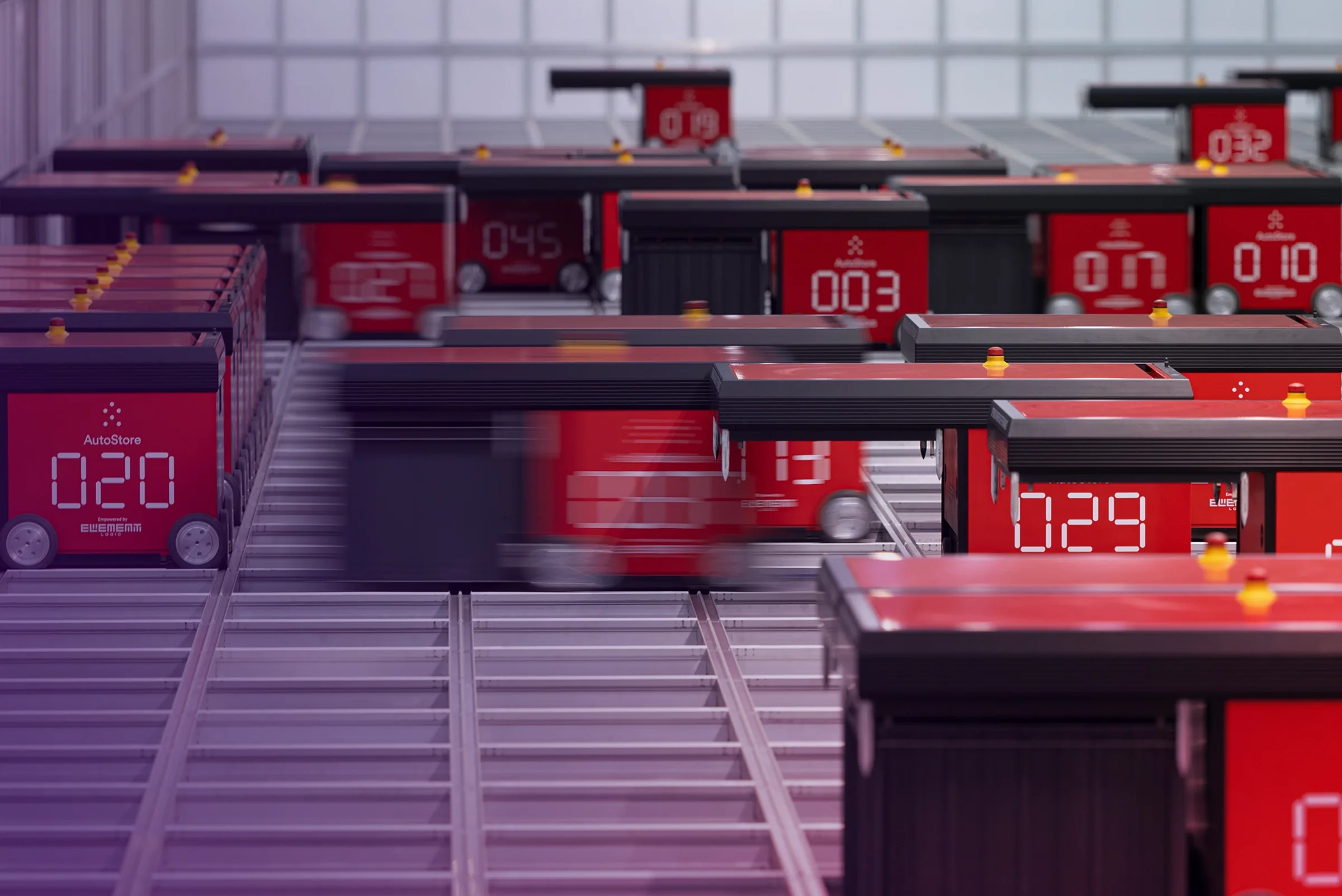
Automation and AI create value when they are introduced as part of a wider operational strategy, not as tactical upgrades.That strategy starts with discipline. Clear inbound controls. Accurate SKU and master data. Defined workflows. Agreed rules around cut‑offs, order release and exception handling. Automation thrives in environments where variability is controlled rather than ignored.Technologies such as goods‑to‑person systems fundamentally change warehouse economics when implemented correctly. Travel time reduces. Storage density increases. Accuracy improves through controlled presentation of inventory. Physical strain on teams decreases. These gains are measurable, but they only compound when the wider operation is equally robust. AI works best when it supports anticipation rather than reaction. In forecasting, labour modelling and capacity planning, it allows teams to see pressure earlier and intervene with confidence. It does not remove responsibility. In many ways, it increases it by demanding clearer ownership and faster decision making.Integration is critical. Automated fulfilment cannot operate in isolation. Systems must connect cleanly across ecommerce platforms, marketplaces, inventory management, customer service and reporting layers. A single, trusted view of stock and orders across all channels is essential for both operational control and commercial agility.Automation also reshapes the role of people within the operation. Value shifts away from manual execution towards oversight, exception management and continuous improvement. Teams need training, accountability and authority to tune systems and respond intelligently when issues arise.
Benefits & Outcomes
When automation and AI are introduced into a mature operational framework, the impact is structural rather than cosmetic.Cost to serve becomes more predictable as volume grows. Dependency on temporary labour reduces. Peak periods feel calmer and more controllable. Accuracy improves because systems are supported by disciplined process, not heroic effort.Growth becomes less linear. Increased order volume no longer requires proportional increases in headcount or warehouse footprint. This stability is often more valuable than raw speed, particularly for brands navigating volatile demand patterns, creator‑led surges or marketplace pressure.Perhaps most importantly, well‑designed automated operations feel calm. Technology fades into the background. Teams spend less time firefighting and more time improving performance. Fulfilment becomes dependable infrastructure, quietly supporting growth rather than demanding constant attention.

Conclusion
Automation and AI are no longer optional in modern ecommerce fulfilment, but they are not shortcuts to performance. They reward discipline far more than ambition.When introduced into operations that lack clarity, consistency or governance, technology amplifies weakness. When introduced into well‑structured environments, it becomes a quiet enabler of scale.The brands that extract real value from automation do not chase novelty. They invest first in clean data, robust process design and clear accountability. They use AI to support better decisions, not to avoid making them. And they recognise that technology elevates the importance of experienced teams rather than replacing them.Automation should never be the headline. It should be the foundation.
Other white papers

The Marketplace Maze

The Future of Returns